Program 02
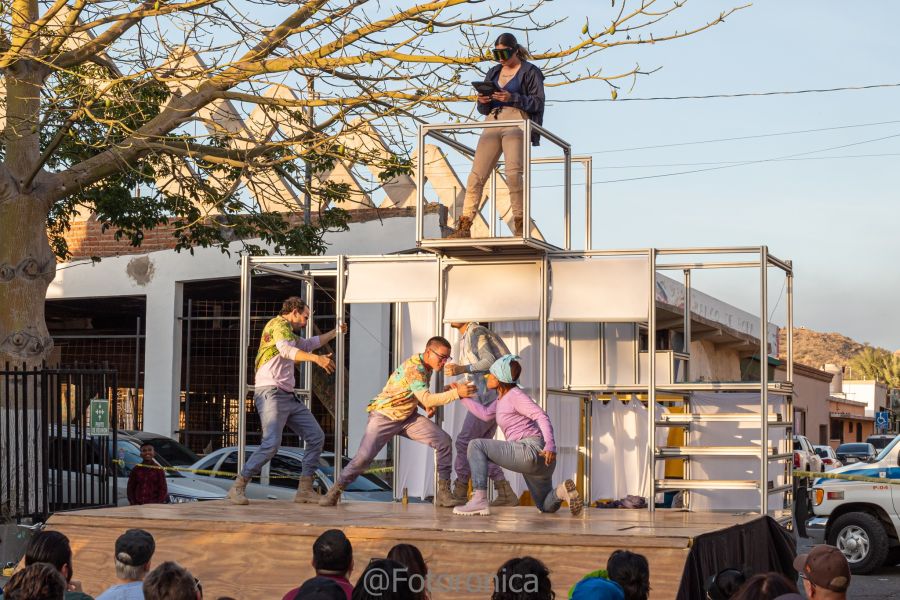
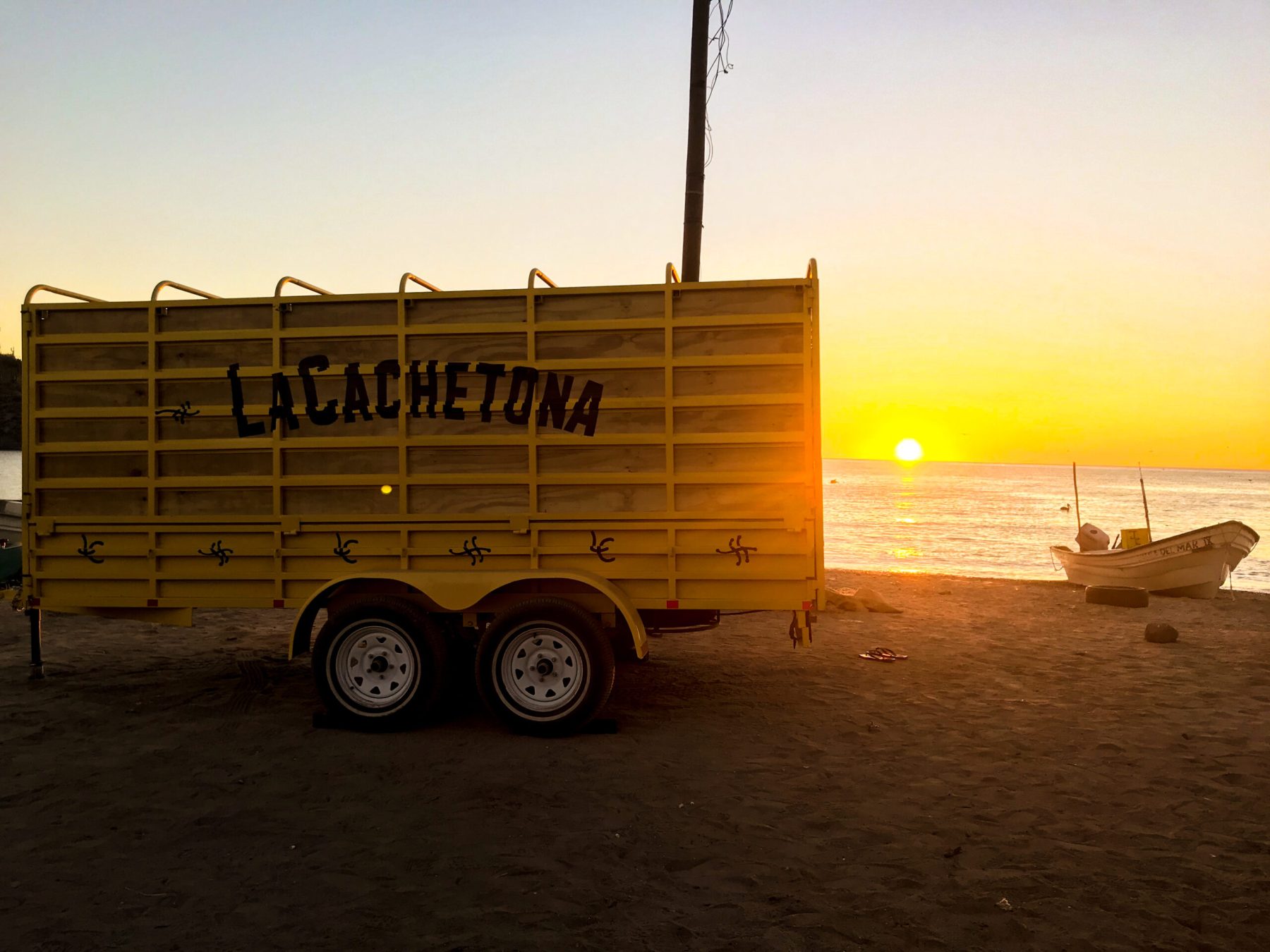
La CachetonaA trailer that opens into a stage and brings professional theater, free of charge, to communities across Sonora that have none.
Who it serves
Communities across Sonora's 72 municipalities, along with middle and high schools, universities, neighborhood associations and civil society organizations. Applications are open, with explicit priority given to under-resourced areas.
And the artists it employs. Each La Cachetona production hires its own cast and its own creative team — direction, set, lighting, costume, sound — separate from those who sustain the season at the venue. These are positions added to the ones that already exist, not the same work divided further. For the people who hold them, a tour of this size means months of continuous work rather than a single date.
What it addresses
In Mexico, 34.1% of people who do not attend theater say the reason is that there are no performances where they live, according to INEGI, the national statistics institute. That is not indifference; it is absence of supply. Sonora is roughly the size of Washington State and has exactly one city with a year-round theater season. For most of the territory, theater is something that happens somewhere else.
La Cachetona inverts the problem. Instead of waiting for the audience to reach the theater, the theater travels.
How it works
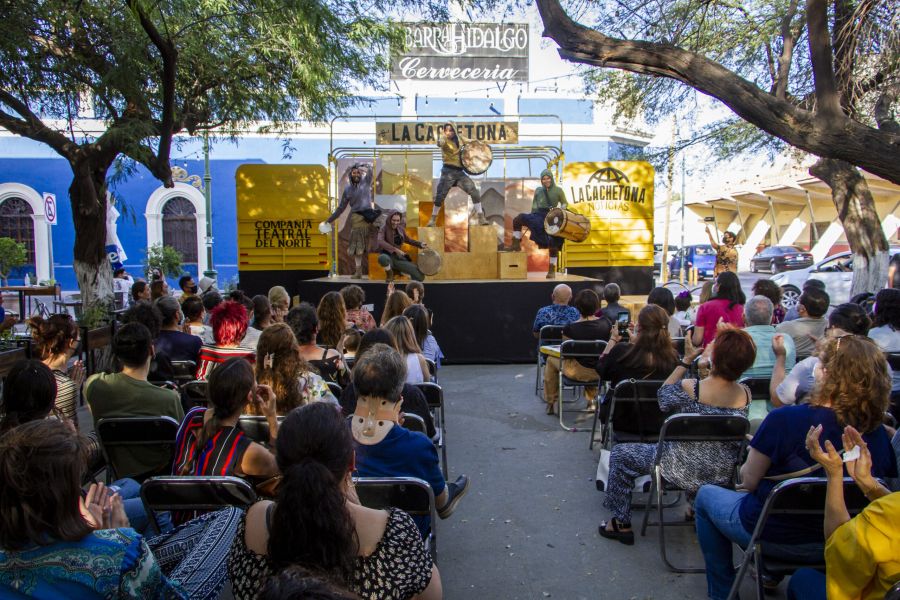
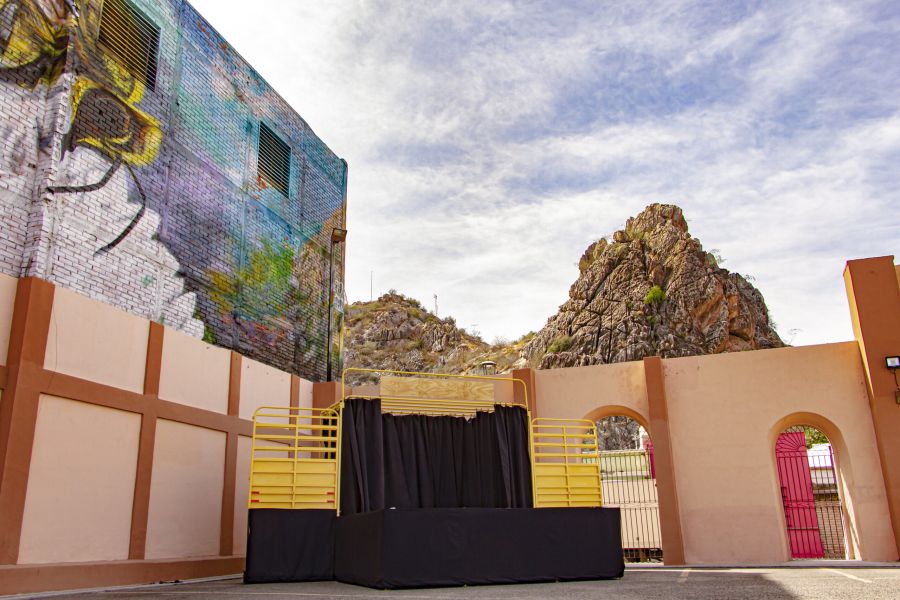
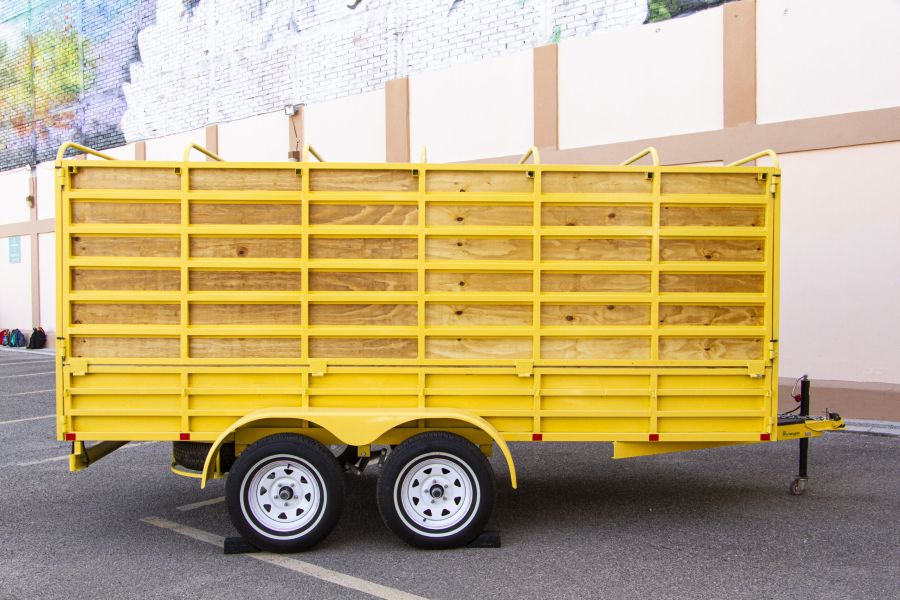
The name comes from a truck: La Cachetona is the pickup that appears in Juilas que vamos lejos, by Sergio Galindo. The trailer opens into a stage with its own lighting and sound, independent of whatever infrastructure the site has. All a site needs is electricity, room to maneuver and access for a car-towed trailer; load-in takes about an hour, depending on the production. Communities and schools apply, sign a commitment letter and guarantee an audience of between 50 and 120 people. The performance is always free, with no contribution from the audience or from the host.
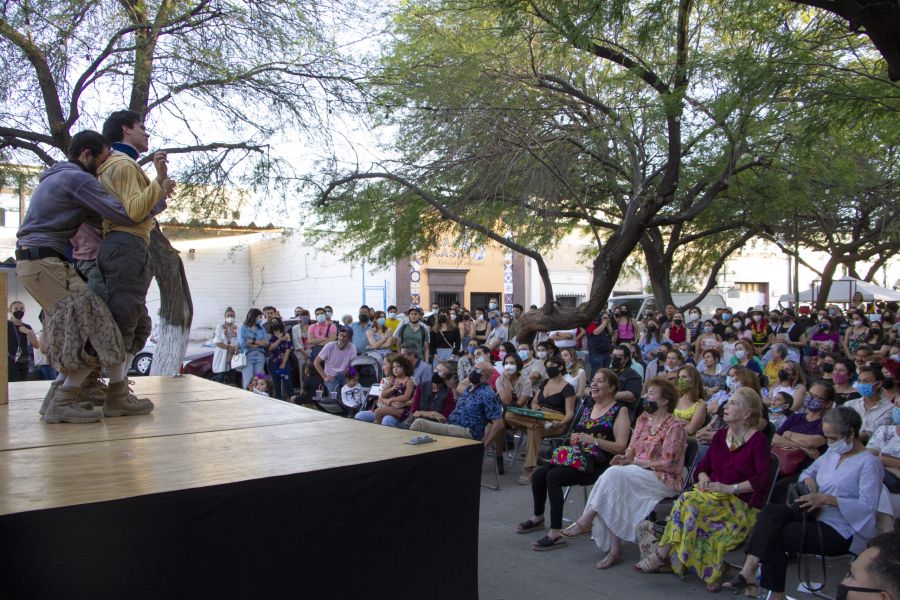
The productions are not touring versions of the repertory. They are conceived for La Cachetona, written and staged for a theater that arrives on a trailer, plays in full sun or at night in a plaza, and sits a few feet from its audience. Some of them later enter the repertory at the venue.
For a good share of the people who receive it, this is their first contact with theater, and the program is designed for that encounter: bringing performing arts to communities, places and audiences that have rarely or never had them close by.
Where it stands
103 performances in its first year, 2021. In 2024 the tour reached 21 of Sonora's 72 municipalities, one end of the state to the other. School performances draw between 135 and 200 people.
The program has been invited to the Centro Cultural Universitario at UNAM, Mexico's national university.
What funding makes possible
The performance being free where it lands is exactly where its social value lies. And the effect of joining in is immediate: every contribution becomes one more community with theatre in it.
Four things sustain it, and box office pays for none of them.
Its own company. La Cachetona hires its own cast and creative team, so each production opens new employment rather than redistributing what already existed. And every tour date is a full working day: travel, load-in, perform, strike, return. The program exists to the extent that work can be paid for.
The production itself. Each piece is built for the program: a set that fits inside the trailer, costumes that survive the highway, a design that works in daylight and at night. That is a complete production, with its creative team hired for that premiere. What is invested there pays twice, because the work is born for the tour and can afterward enter the repertory at the venue.
Travel. Fuel, tolls, lodging and per diem for a company crossing a state the size of Washington to give a one-hour performance. Mexican public grants cover activity; they rarely cover the road.
The trailer. It is a vehicle, and the public programs that sustain the company expressly exclude the purchase of assets. The entire program depends on a unit that only private philanthropy can replace.
A gift to La Cachetona translates directly into how many performances happen, how many municipalities the year's tour reaches, and what condition the company travels in. It is the simplest relationship in our work: more resources, more communities.
Contact
Paulina Serrato, Programs and Development · proyectos@mentidero.mx
Download: program sheet, PDF · English and Spanish